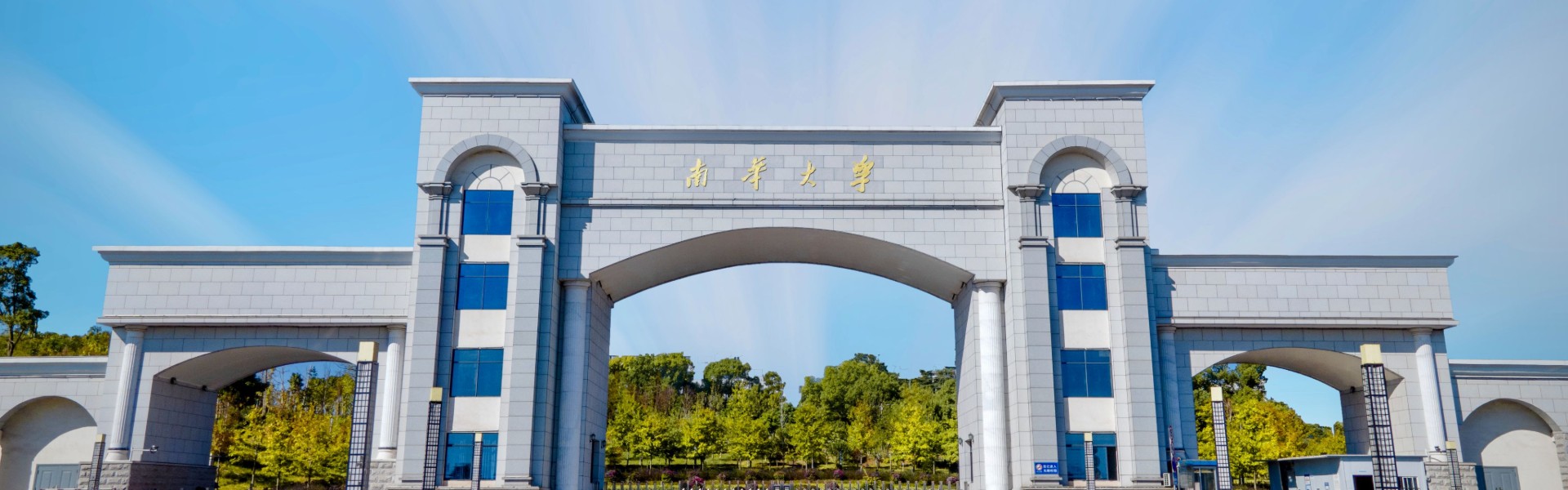
On May 18, the vice chancellor of the University of Namibia, Kenneth Martengu, led a delegation to visit the University of South China. Xia Kun, the president of USC, attended the symposium and delivered a speech. Wang Lihua, vice president, presided over the symposium.
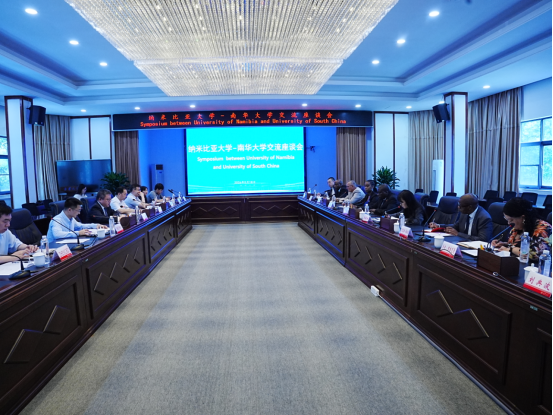
Scene from the symposium
At the symposium, Xia Kun warmly welcomed Kenneth Matengu and his delegation. He said that over more than 60 years of running school, USC has remained true to its original mission, forming distinctive nuclear characteristics, medical brands, and environmental advantages, making it a cradle for talent cultivation in the national nuclear industry; The university's nuclear science and technology discipline has been selected as a world-class discipline in Hunan Province, with several outstanding disciplines ranked in the top 1% globally by ESI. It has accumulated solid research foundations and disciplinary strength in key areas such as nuclear fuel recycling, safe operation and maintenance of nuclear facilities and decommissioning management, safe disposal of radioactive waste, and clinical applications of nuclear medicine; The university attaches great importance to practical cooperation in education, culture, and science and technology between China and Africa, and is willing to fully support the construction of the University of Namibia School of Nuclear Science, regularly accept faculty and students from Namibia for study, coordinate the advancement of joint scientific research and deep cooperation such as faculty exchange and appointment, actively promote friendly cooperation between the two universities to be included in the China-Africa bilateral government exchange and cooperation system, and rely on platforms such as the China-Africa Economic and Trade Cooperation Forum to continuously broaden cooperation fields and strengthen the foundation of China-Africa education and technology cooperation.
Kenneth Matengu briefly introduced the university's history, discipline construction layout, and medium- and long-term development strategy at the University of Namibia. He said that Namibia's highly developed nuclear energy industry has enormous potential and urgently needs high-quality higher education resources to empower industry upgrades; As Namibia's top institution of higher education, the university is closely aligned with the energy industry development layout and is fully preparing to establish a nuclear science-related college. He hopes USC will fully leverage its nuclear discipline strengths to provide strong support in building the nuclear discipline system, cultivating key faculty teams, planning and building research and teaching laboratories, and joint training of international talent; He looks forward to both sides establishing a long-term, stable, and normalized cooperation mechanism and working together to create a new vision for win-win China-Africa science and education cooperation.
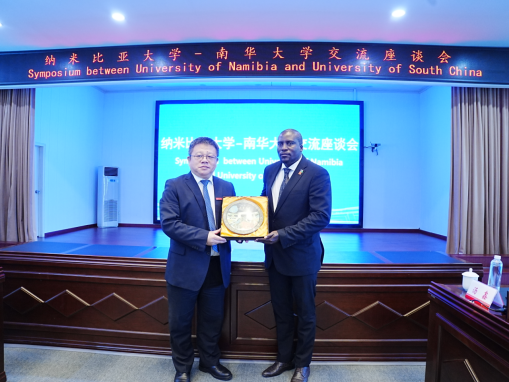
Both sides exchanged souvenirs
At the meeting, participants from both sides engaged in in-depth discussions on topics such as the establishment of nuclear discipline majors, talent training programs, faculty training, laboratory construction, and research cooperation.
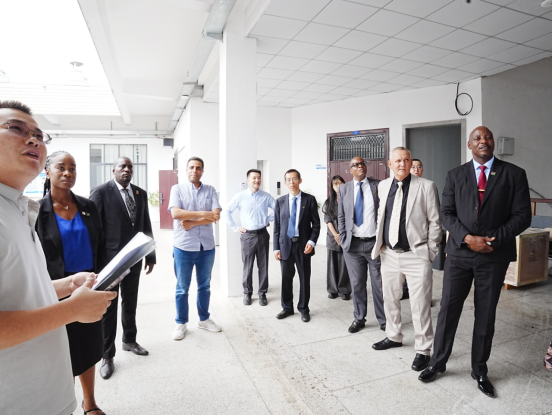
Visit the Advanced Nuclear Fuel Cycle Chemical Research Center
Before the meeting, Kenneth Martengu and his entourage visited the Key Laboratory of Pediatric Rare Diseases of the Ministry of Education, the Key Laboratory of Neurodegenerative Disease Research of the National Health Commission and related teaching and research platforms to learn more about the school's scientific research innovation, platform construction and talent training in the fields of nuclear science, medicine, and environmental protection.